

Buying a home is a major milestone, and for most Indians, it involves taking a home loan. Understanding the home loan process in India can help you avoid delays, reduce costs, and make confident decisions. This step-by-step guide explains how home loans work for Indian homebuyers in simple terms.
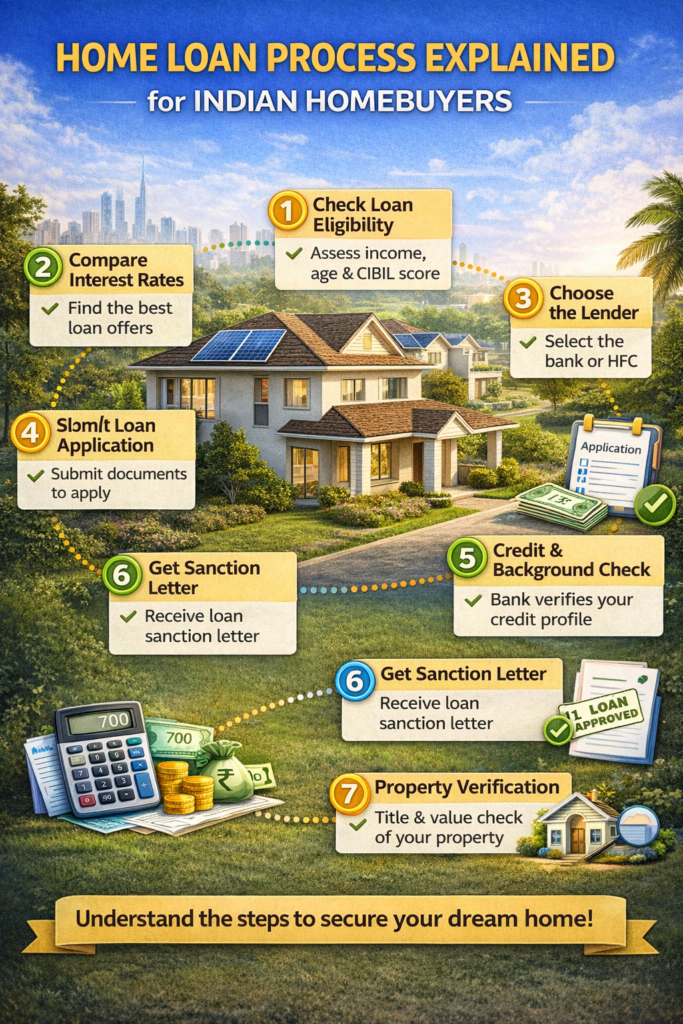
Step 1: Check Your Eligibility
Before applying, banks assess your home loan eligibility based on:
- Monthly income
- Age and employment type (salaried/self-employed)
- Credit score (CIBIL score above 700 is preferred)
- Existing loans and EMIs
Tip: Use online eligibility calculators to estimate your loan amount.
Step 2: Compare Home Loan Interest Rates
Different lenders offer different home loan interest rates in India.
Compare:
- Interest rate (fixed or floating)
- Loan tenure (up to 30 years)
- Processing fees
- Prepayment and foreclosure charges
Search-aligned keywords:
best home loan interest rates India, compare home loans
Step 3: Choose the Right Lender
Home loans are offered by:
- Public sector banks
- Private banks
- Housing Finance Companies (HFCs)
Choose a lender with transparent charges, good customer support, and flexible repayment options.
Step 4: Submit Home Loan Application
Once selected, submit the home loan application with required documents.
Documents Required:
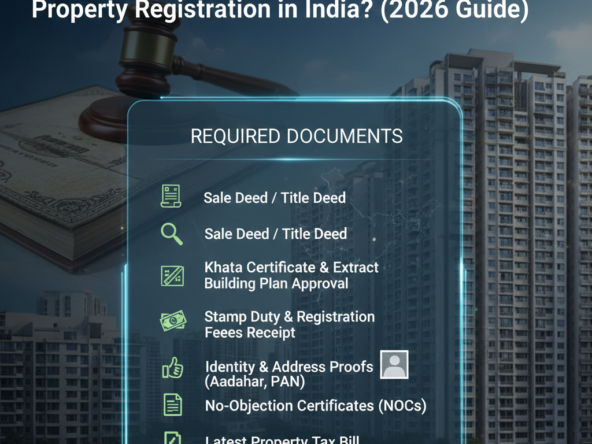
- Identity & address proof
- Income proof (salary slips / ITR)
- Bank statements (last 6 months)
- Property documents
Step 5: Credit Assessment & Verification
The lender conducts:
- Credit score verification
- Employment/business stability check
- Bank statement analysis
They may also do a telephonic or physical verification.
Step 6: Loan Sanction Letter
If approved, the bank issues a loan sanction letter mentioning:
- Loan amount
- Interest rate
- Tenure
- EMI amount
- Terms & conditions
Important: Review the letter carefully before accepting.
Step 7: Property Legal & Technical Verification
The bank verifies:
- Property ownership and title
- Approved building plans
- Legal clearances
A technical valuation ensures the property price matches market value.
Step 8: Loan Agreement & Disbursement
After verification:
- You sign the loan agreement
- Post-dated cheques or ECS mandate is set
- Loan amount is disbursed (full or in stages for under-construction properties)
Step 9: Start EMI Repayment
EMI repayment starts:
- Immediately after disbursement (for ready properties), or
- As pre-EMI interest for under-construction homes
Home Loan Tips for Indian Homebuyers
- Maintain a good CIBIL score
- Choose longer tenure for lower EMIs
- Make higher down payments if possible
- Check tax benefits under Section 80C & 24(b)
- Avoid frequent job changes during loan processing
Final Thoughts
Understanding the home loan process in India makes home buying smoother and stress-free. Proper planning, documentation, and lender comparison can help you secure better interest rates and faster approvals.