


A Complete Guide for First-Time & Experienced Homebuyers
Buying a flat is one of the biggest financial decisions you’ll ever make. In India, a small mistake—legal, financial, or technical—can lead to years of stress. To help you make a safe, smart, and confident purchase, here’s a complete checklist you should follow before buying a flat in India.
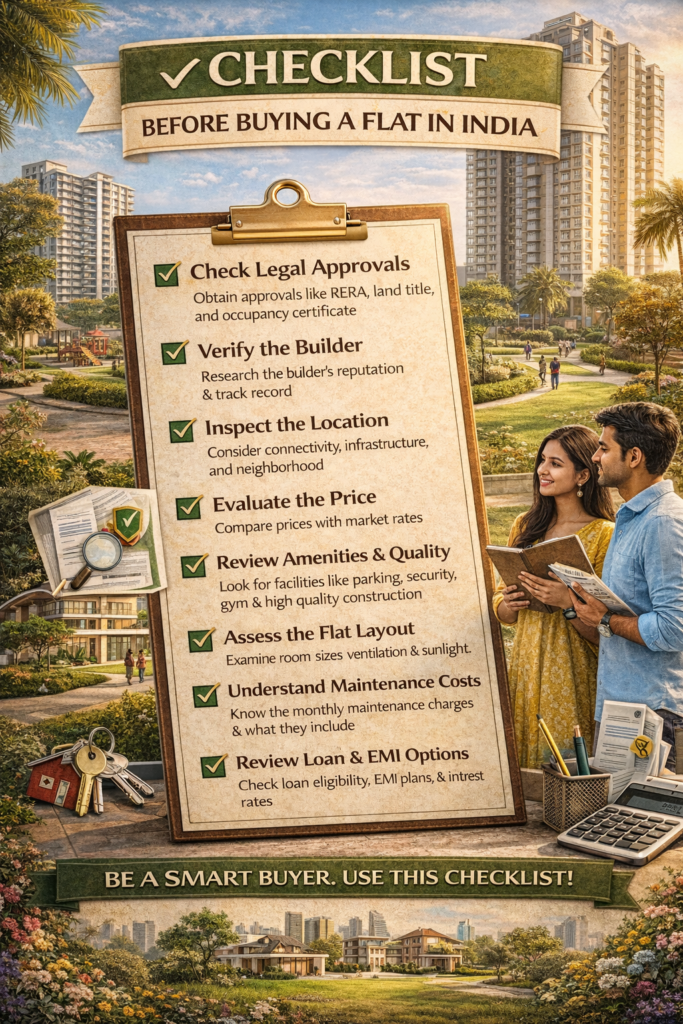
🏗️ 1. Verify the Builder’s Background
Before anything else, research the developer:
- Check past projects and delivery timelines
- Read Google reviews and customer feedback
- Visit completed projects if possible
- Ensure the builder has a clean legal history
A reputed builder reduces the risk of delays, poor construction, and legal disputes.
📜 2. Check RERA Registration
Every residential project must be registered under Real Estate Regulatory Authority (RERA).
- Verify the RERA registration number on the state RERA website
- Check project approval status, possession date, and land details
- Ensure the details match what the builder is promising
🚨 Never buy a flat in a non-RERA registered project.
🏠 3. Legal Due Diligence of the Property
Ensure the flat has clear and marketable title:
- Sale Deed / Title Deed
- Mother Deed
- Land use approval (Residential)
- Encumbrance Certificate (EC) – No loans or disputes
- Approved building plan from local authority
👉 Always get documents verified by a property lawyer.
🧱 4. Construction Quality & Specifications
Don’t rely only on brochures:
- Visit the site personally
- Check construction material quality
- Verify carpet area vs super built-up area
- Ask for written specifications (flooring, fittings, electricals)
💡 Tip: Carpet area is the actual usable area, not what’s marketed.
📍 5. Location & Connectivity
A good flat in a bad location is still a bad investment.
Check:
- Road connectivity & public transport
- Nearby schools, hospitals, offices
- Future infrastructure plans
- Water supply and drainage
- Noise levels and pollution
Think livability + resale value.
💰 6. Total Cost Breakdown (Hidden Costs Alert!)
Ask for a detailed cost sheet, including:
- Base price
- GST
- Stamp duty & registration
- Parking charges
- Clubhouse & maintenance charges
- Floor rise, PLC, and other extras
📌 Never rely on verbal promises—get everything in writing.
🏦 7. Home Loan & Bank Approval
If banks have approved the project, it adds credibility.
- Check approvals from major banks
- Compare home loan interest rates
- Verify EMI affordability (30–40% of income rule)
- Understand loan tenure & prepayment charges
Banks like **Reserve Bank of India regulated institutions follow strict checks.
📝 8. Agreement to Sale – Read Carefully
Before signing:
- Possession date & penalty clause
- Carpet area mentioned clearly
- Payment schedule linked to construction stages
- Exit & cancellation clauses
- Maintenance handover terms
⚠️ Never sign without reviewing it with a lawyer.
🏢 9. Society Formation & Maintenance
Ask:
- When will the society be formed?
- Who maintains the building initially?
- Monthly maintenance estimate
- Sinking fund & corpus charges
This impacts your long-term living cost.
🔑 10. Possession & Occupancy Certificate
Before taking possession:
- Ensure Occupancy Certificate (OC) is issued
- Completion Certificate (CC) received
- Check for water, electricity, lift approvals
Without OC, resale and home loans can become difficult.
🧠 Final Thoughts
Buying a flat in India isn’t just about the price—it’s about legal safety, future value, and peace of mind. Follow this checklist, take professional help where needed, and never rush the decision.
A well-researched purchase today saves years of regret tomorrow.
